A Note on Bucket Strategies
A Note on Bucket Strategies
If you've researched retirement income strategies, you may have encountered the argument that bucket-based approaches are outdated. The argument has merit — but only when applied to a specific, older version of the bucket strategy.
The classic bucket approach, popularized in the 1980s and 1990s, was largely static. Buckets were established at retirement and refilled on a fixed schedule, regardless of market conditions or changing household circumstances. That approach is outdated. It oversimplifies the complexity of a 30-to-40-year retirement and doesn't respond to the realities a household will encounter along the way.
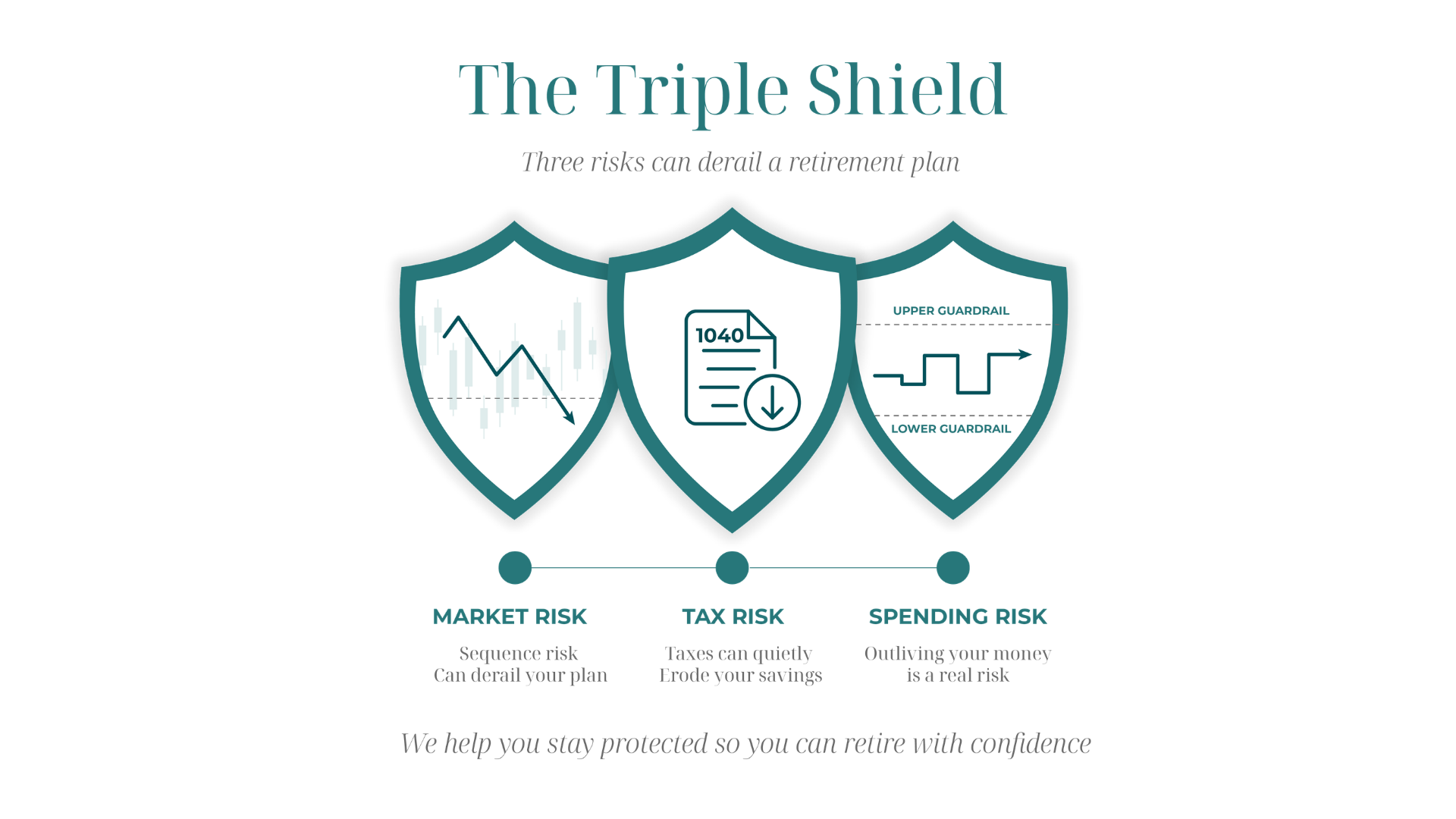
The ThreeTrees framework is a different generation of the structure. The bucket organization handles the question of which assets fund which years — a sequencing problem the static approach never fully solved. Layered on top of that structure are the dynamic withdrawal guardrails described in Shield 3, which flex spending up and down each year based on actual portfolio performance. The two work together: the structure provides stability and clarity, the dynamic modeling provides responsiveness.
Modern retirement income research and the leading planning software platforms have converged on this hybrid approach for the same reason we use it: structure alone is too rigid, and dynamic modeling alone lacks the visible architecture clients need to understand their own plan. Together, they produce both.
Retire longer, not leaner.